



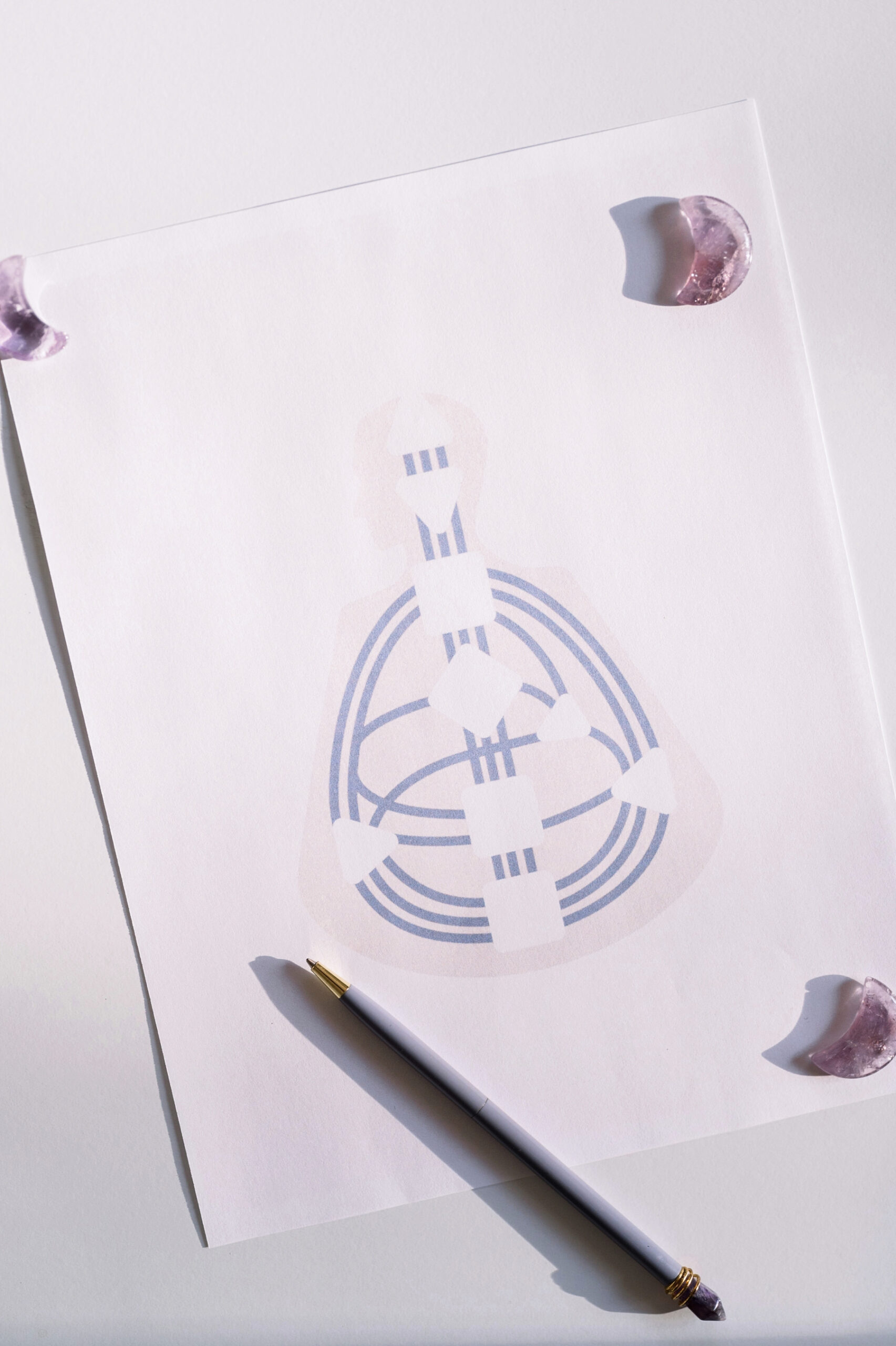
Human Design Isn’t Supposed to Feel Like Homework
Most people don’t get overwhelmed by Human Design because it’s complicated. They get overwhelmed because they’re trying to use all of it at once.
Charts. Gates. Centers. Profiles. Threads explaining things out of order. Opinions presented as rules. Suddenly a tool meant to create relief becomes another system you’re managing with your brain clenched.
If Human Design is making you feel behind or confused, that’s not a personal failure. It’s a signal that you’re using too much of the system, too soon.
The Real Job of Human Design
Human Design is not meant to be mastered. It’s meant to reduce friction.
At its best, it answers a small set of practical questions:
- How do I make decisions without second-guessing myself?
- Where am I leaking energy?
- Why does forcing myself into certain rhythms keep backfiring?
If your current relationship with Human Design doesn’t make those things clearer, it’s not doing its job yet.
Start With the Parts That Actually Carry Weight
You do not need your whole chart to begin. You need three things.
Type
This tells you how your energy is designed to move through work and life. Not how you should work. How your system naturally functions when it’s not compensating. If you’re constantly exhausted or frustrated, your Type usually explains why.
Strategy
This is about timing and engagement. It helps answer, “When should I act, respond, wait, or initiate?” Most people feel overwhelmed because they’re pushing at the wrong moments or responding to everything.
Authority
This is the most important piece. Authority tells you how to make decisions in a way that doesn’t erode trust in yourself. If decision-making is where you spiral, this is where Human Design earns its keep. Everything else in the chart is secondary until these three are working.
Why More Information Usually Makes Things Worse
High-functioning people tend to over-consume. They read more. Save more. Learn more. Then wonder why clarity isn’t landing.
Human Design doesn’t work through accumulation. It works through observation. You don’t need to know more. You need to notice what happens when you try one small shift.
For example:
- What changes when you stop answering immediately?
- What happens when you wait before committing?
- Where does your energy dip consistently, regardless of motivation?
Those patterns matter more than memorizing definitions.
Treat Human Design Like a Diagnostic Tool
This is where most people go wrong. They treat Human Design like an identity or a rulebook. A more useful approach is to treat it like diagnostic data.
Not: “This is who I am.”
But: “This explains why this system keeps breaking down.”
Human Design works best when paired with real-life context: your job, your responsibilities, your nervous system, your season of life. It’s not here to override reality. It’s here to help you design within it.
One Way to Use Human Design This Week
If you want to make this usable without overwhelm, try this. Pick one upcoming decision. Not a life overhaul. Just one decision that normally creates friction.
Before you answer, ask:
- What does my Authority need here?
- Do I need time, a response, space, or more information?
- What happens if I don’t decide right now?
That’s it. No chart deep dives. No new tabs. Just one aligned experiment.
When Support Actually Helps
If you’re stuck in analysis mode, support can shorten the loop. Not because you’re incapable, but because translation matters.
Human Design becomes much easier when someone helps you connect it to:
- your work rhythms
- your boundaries
- your decision patterns
- your capacity
That’s why I treat it as a lens, not the whole structure.
If you want a simple orientation, the Human Design Mini-Reading is designed for exactly this moment. If you already know your chart but your life still feels heavy, that’s usually a systems issue, not an insight issue. That’s where deeper governance work comes in.
Take what’s useful. Leave the rest.



Be the first to comment